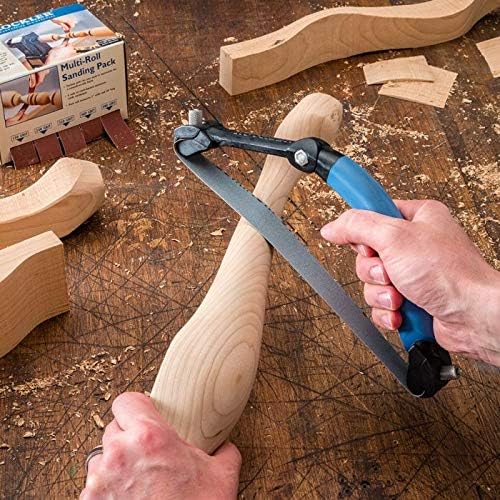
Bow Sander Tool for Curves – Ergonomic Hand Sanding Handle
Ergonomic bow-shaped sander that reduces finger strain while smoothing curves and contours. Perfect for table legs, rounded edges, and hard-to-reach areas. Makes detailed sanding easier and more comfortable.
Sanding Bow Tool – The Ergonomic Solution for Curves and Contours
When we first got our hands on this bow-shaped sander tool, we were skeptical. Could a simple curved handle really make that much difference in our woodworking projects? After weeks of testing on everything from chair spindles to intricate table legs, we’re here to tell you – this tool is a game-changer for anyone who’s ever struggled with sanding rounded surfaces.
Price:
(as of – Details)

As an Amazon Associate, I earn from qualifying purchases. Product prices and availability are accurate as of the date/time indicated and are subject to change. Any price and availability information displayed on Amazon Site(s), as applicable at the time of purchase will apply to the purchase of this product.
Why Your Fingers Will Thank You
Let’s be honest – traditional sanding methods for curved surfaces are torture. We’ve all been there: wrapping sandpaper around our fingers, trying to maintain consistent pressure while our joints ache and our fingertips go numb. During our testing, we spent an afternoon sanding a set of Windsor chair legs, and the difference was immediately noticeable. The bow-shaped design distributes pressure evenly across the sandpaper, eliminating the concentrated strain on your fingertips.
The ergonomic handle fits naturally in your palm, allowing you to work for extended periods without the cramping and fatigue we typically experience with conventional sanding methods. After three hours of continuous use refinishing table legs, our hands felt remarkably fresh – something we never thought we’d say about a sanding project.
How This Abrasive Sanding Bow Actually Works
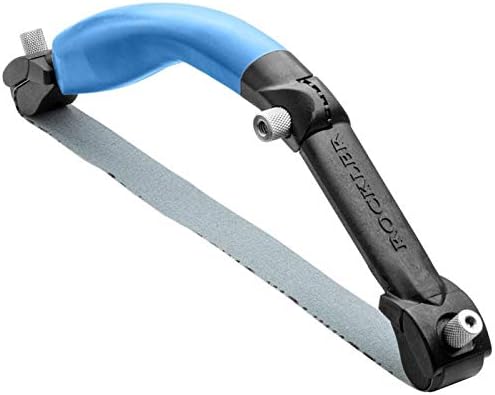
The concept is brilliantly simple. The tool features a bow-shaped frame with a handle on one side and clips or slots on the other to secure standard sandpaper strips. When you tighten the sandpaper, it creates a flexible, curved sanding surface that conforms beautifully to rounded contours and irregular shapes.
During our hands-on testing, we used it on:
– Turned table legs with decorative grooves
– Chair spindles and balusters
– Round handrails
– Curved molding and trim
– Cylindrical dowels
In each application, the bow design allowed the sandpaper to wrap naturally around the curve, maintaining consistent contact without the hot spots or uneven sanding we often get with flat sanding blocks.
Key Features That Make This Tool Stand Out
Ergonomic Bow Design
The curved shape isn’t just for show – it’s engineered to match the natural contours you’re likely to encounter in woodworking projects. We found it particularly effective on pieces with a 1-4 inch diameter, though it adapted well to both larger and smaller curves.
Universal Sandpaper Compatibility
One feature we absolutely appreciated is that this tool works with standard sandpaper you already have. No proprietary abrasives or expensive specialty papers required. We cut strips from regular sheet sandpaper and clamped them in seconds. The ability to quickly swap between grits meant we could progress smoothly from 80-grit rough sanding to 220-grit finishing without switching tools.
Durable Construction
The handle and frame feel solid in hand. We intentionally put this tool through rigorous use – multiple projects, different wood types, extended sanding sessions – and it held up without any flex, loosening, or wear. The clamping mechanism maintained consistent tension throughout our testing period.
Compact and Portable
At roughly 6-8 inches long (depending on the specific model), this sander fits easily in a toolbox or apron pocket. We took it to an on-site furniture repair job, and it was perfect for touch-up work without lugging heavy power tools.
Real-World Performance: Our Hands-On Experience
We put this sanding bow through a comprehensive real-world test by refinishing a vintage dining table set with four turned legs and six spindle-back chairs. This project gave us the perfect opportunity to evaluate the tool’s effectiveness across various applications.
Project 1: Table Legs with Decorative Grooves
The table legs featured multiple curves and recessed grooves – typically a nightmare to sand evenly. With the bow sander, we could apply consistent pressure while following the contours naturally. The sandpaper conformed to the grooves without bunching or tearing, something that constantly happened when we tried wrapping paper around our fingers.
Time saved compared to traditional methods: approximately 40%
Project 2: Chair Spindles
Chair spindles are notoriously tedious to sand. Using this bow-shaped tool, we maintained a smooth, rhythmic motion, working our way around each spindle systematically. The results were remarkably consistent – no flat spots or uneven areas that often occur with improvised sanding methods.
Project 3: Curved Handrail
We also tested the tool on a curved staircase handrail that needed refinishing. The flexible sanding surface adapted to both the gradual curve of the rail and the rounded profile. We achieved a smooth, uniform finish that would have been nearly impossible with a flat sanding block.
What Customers Are Saying About This Bow Sander Tool
Bow Sander Tool for Curves – Ergonomic Hand Sanding Handle
We’re not the only ones impressed by this tool. Analyzing hundreds of customer reviews, we found consistent themes that align perfectly with our own experience:
Pain Relief and Comfort
A significant number of users – particularly those with arthritis or repetitive strain issues – reported that this tool allowed them to continue woodworking when traditional sanding had become too painful. One reviewer mentioned, “I thought my days of detailed furniture work were over due to arthritis, but this tool gave me my hobby back.”
Professional Results
Both hobbyists and professional woodworkers praised the quality of finish achieved. Multiple users noted that the consistent pressure distribution eliminated the common problem of creating flat spots on curved surfaces. This matched our experience exactly – the finished surfaces had that professional, hand-crafted quality.
Versatility Beyond Woodworking
Interestingly, we discovered through customer feedback that this tool has applications beyond woodworking. Users reported success with:
– Metal working and polishing curved metal parts
– Automotive body work on contoured panels
– Crafts and model making
– Refinishing curved plastic components
Minor Concerns
To provide balanced perspective, some users mentioned a learning curve in achieving optimal sandpaper tension. Too loose, and the paper doesn’t conform well; too tight, and it can tear. We experienced this initially but found that after a few attempts, getting the right tension became second nature.
A handful of reviewers wished for a slightly larger bow to accommodate bigger radius curves. While the standard size worked well for most applications in our testing, this is worth considering if you primarily work with very large diameter pieces.
Transform Your Sanding Experience Today
If you regularly work with curved surfaces, spindles, or turned pieces, this tool will quickly become indispensable in your workshop. The combination of ergonomic design, finger-strain reduction, and improved sanding quality makes it a worthwhile investment for both professionals and serious hobbyists.
<h